The next generation of delivery leaders won’t be measured by how many people they manage. They’ll be measured by how well humans and agents work together. Mohammad has spent two and a half decades watching every major technology wave reshape that answer, and he’s certain this one is different.
Back when CRM was a radical idea, Mohammad was already writing the code behind it. He watched the cloud dismantle decades of on-premise assumptions, and he was building an e-commerce startup from zero to 350 people in India when AI first entered enterprise conversations. Each wave felt significant at the time. None of them, however, felt like this.
“My 25-year journey in technology has been defined by disruption, first on-premise to cloud, and now cloud to AI,” he said. “But agentic transformation is the most profound technology shift most of us will ever work on, and it’s progressing at a pace we’re only just beginning to process.”
As VP, Industries Practice at Salesforce’s Global Delivery Centers (GDC), Mohammad leads a team of over 800 people with a distinctive charter: to be the first and most rigorous internal users of Salesforce engineering. His team stress-tests products before they reach customers, delivering real-world insights back into engineering to ensure what gets built works at enterprise scale.
Humans, agents, and platforms together
For Mohammad, every previous wave of technology was built on one assumption: Humans do the work, technology helps them do it better. Agentic AI breaks that assumption entirely. What’s emerging is a genuine working relationship between human intelligence and machine intelligence — one where each brings something the other cannot. “This is where it’s distinctively different,” he said. “Humans, agents, and platforms working together.”
The moment that relationship becomes real, every question about work stops being a technology question and becomes a leadership one.
“Which outcomes can agents own end-to-end? Where are those mistakes expensive? When does output need a human before it moves? The answers don’t lie with configuration teams — they lie in decisions made by leadership,” he said.
For delivery teams, those decisions start with the hardest question of all: is the delivery chain itself still fit for purpose?
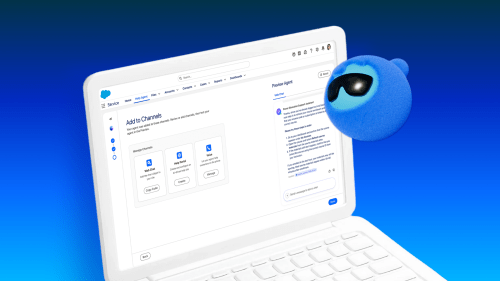
Learn more: Customer Zero is Salesforce’s commitment: we build with our own products and test everything internally first. That accountability, to ourselves before anyone else, is what earns customers’ trust.
The rebuild has already begun
Traditional delivery was built for a different era of customer expectations. With agentic AI, that era is over. What replaces it is far more compelling. Today’s customers want faster time to value, less friction, and evidence of outcomes, not activity. Meeting that bar means questioning every stage of delivery designed around human effort.
Discovery does not have to be manually intensive. Scoping does not have to be rebuilt from scratch for every engagement. Proposals do not have to take weeks. Handoffs do not have to lose context.
“At Salesforce’s Global Delivery Centers, that redesign is already underway. Roles are being reimagined. Offers, solutions, and delivery are being reinvented. Teams are developing genuine AI-native mental models, not just AI skills. Even the economics of intelligent execution — tokens, orchestration costs, and consumption patterns — are being built into solution design from day one.
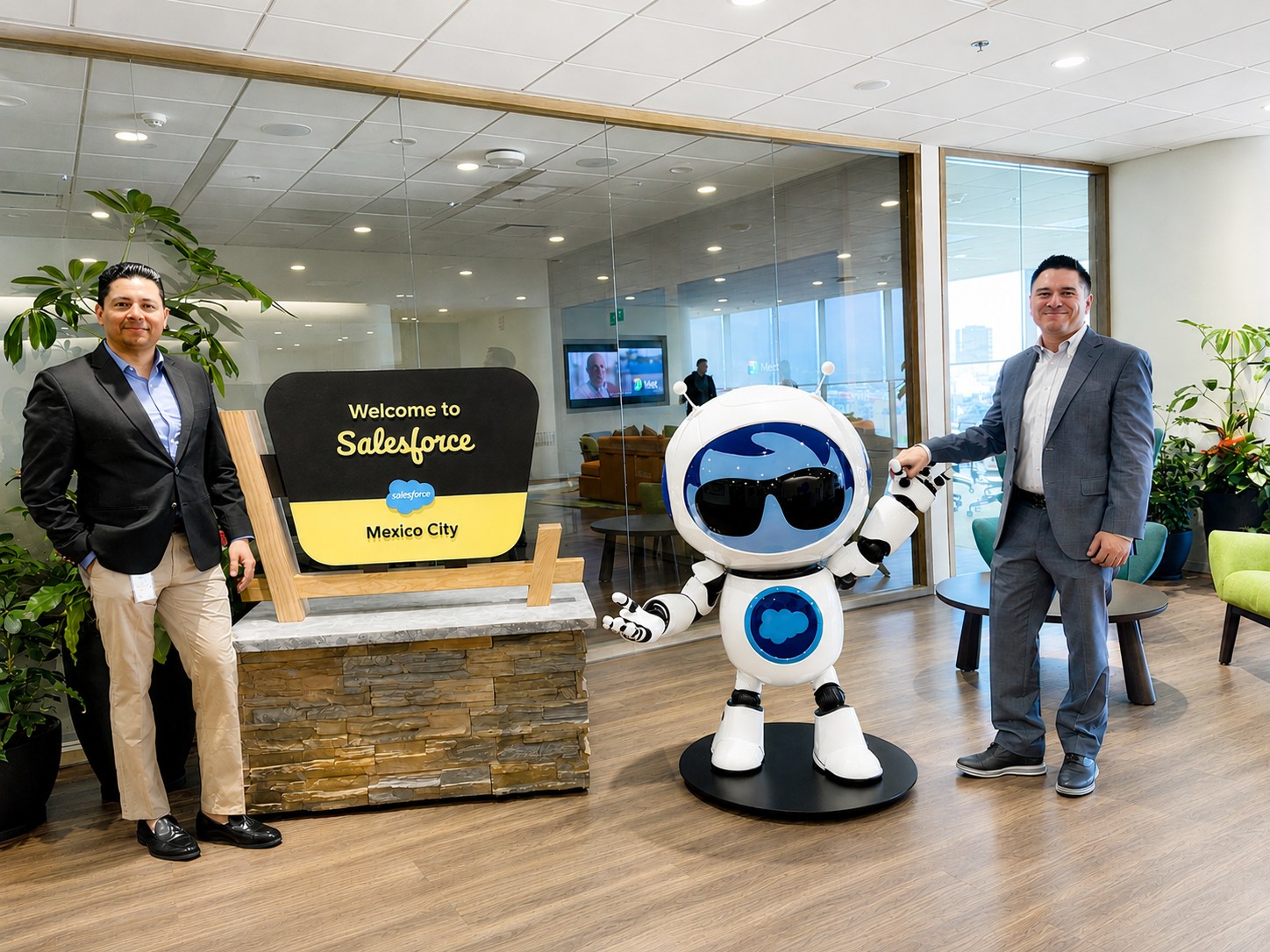
Central to this is how Salesforce approaches delivery itself. Forward Deployed Engineers (FDEs), domain experts who work directly with senior leadership, ensure that AI initiatives are framed as end-to-end business process transformations, going beyond standard software implementations. It is the difference, Mohammad said, between a pilot that goes nowhere and a redesign that actually sticks.
“Our own agentic transformation is the first and primary proof point for what we take to customers,” he added. “We are not advising organizations on a journey we have not begun ourselves.”

Learn more: As AI agents move from pilot to production, the real question is who makes sure they actually work. Meet the forward deployed engineers, today’s hottest job in tech.
Foundation matching ambition
For Mohammad, the platform beneath the execution matters as much as the leadership above it.
“95% of customers we work with struggle with siloed, duplicated, or poor-quality data. You cannot build an intelligent agent on a fragmented foundation. That gap between ambition and foundation is where most agentic transformations quietly stall,” he said.
This is precisely the problem Salesforce has engineered its platform to solve. Agentforce, built with the Einstein Trust Layer at its core, allows organizations to create agents that reason, decide within guardrails, and act across Sales, Service, Marketing, and Commerce workflows.
The integration of Informatica and the release of Headless 360 have established the platform as a system of intelligence rather than a system of records. The CRM can show up wherever the work happens, the interface is a conversation, and agents orchestrate and execute in a trusted platform.
“Security, governance, zero data retention, protection of sensitive data. These are not afterthoughts,” he said. “They are the foundation.”

Platforms have to be engineered, judgment needs to be developed
Ask Mohammad what separates organizations leading agentic transformation from those merely experimenting with it, and he does not hesitate.
“The bottleneck is never the technology. It is always judgment,” he said.
When agents can execute at speed and scale, the scarcest thing in the room is knowing what work is worth doing, recognizing when the output is wrong, and having the experience to ask the question the agent never thought to ask.
“Leaders who frame challenges with a customer-first lens and embrace agentic innovation with accountability gain unparalleled leverage. Those who empower their teams with vision, rather than just delegating tasks, are the ones who truly drive meaningful change,” Mohammad said.
But judgment can’t be developed from a distance. The leaders getting this right are not the ones with the most pilots or the biggest AI budgets. They are the ones doing the work themselves: actually using the tools, learning where they break, and owning the decisions that follow, well beyond receiving briefings.
As agents take on more execution, the risk surface shifts upward toward those who govern them. An agent that sends emails, moves money, or changes records can cause serious damage — and when it is wrong or compromised, consequences travel at exactly the same speed as the agent itself.
Work of a lifetime
Now, with a career of more than two decades witnessing every major technology wave, Mohammad is certain about this moment and what it means.
“This is the most profound shift most of us will work on in our careers. Not because of what technology can do. But because of what it demands of the leaders who choose to engage with it seriously,” he said.
It demands judgment. It demands courage. And it demands the willingness to be personally accountable.
Ready to lead transformation from the place where it begins?
Check out opportunities at Salesforce and join our talent community.
AI supported the writers and editors who created this article.