I have a soft spot for Hotjar. It was the first behavior analytics tool I used because of its easy setup, intuitive AI, and generous free tier, which was enough to optimize my freelance business website.
But teams with more complex needs don’t always find it adequate.
Common reasons why companies switch from Hotjar or choose alternative products include:
- High cost at scale, especially when you add other modules, like VoC for feedback collection or Product Analytics.
- Filtering that makes it hard to find relevant sessions.
- Missing features. In particular, A/B testing, so you can’t test hypotheses from Hotjar behavior analytics.
- Steep learning curve, which slows down the adoption of more advanced features and full value realization.
- Glitches when using it across multiple sites.
- Limited web analytics, so it’s no substitute for Google Analytics 4.
- Slower site load speed due to the tracking script.
If you’re thinking about switching because of these issues or considering Hotjar but want to avoid them, I’ve prepared a list of the top eight Hotjar alternatives that could be a better fit for different use cases.
Top Hotjar Alternatives At A Glance
| Tool | Best for | Pricing | Free option |
|---|---|---|---|
| Crazy Egg | Consolidating the full optimization loop | $29–$599/mo, billed annually, no overages | Free plan + 30-day trial |
| Microsoft Clarity | Free behavior analytics | Free — no paid tier exists | Free forever |
| Mouseflow | A like-for-like replacement | $25–$319/mo billed annually, then custom | Free plan + 14-day trial |
| Lucky Orange | Small e-commerce teams | $32–$839/mo paid annually, then custom | 7-day trial only |
| FullStory | Product adoption and digital transformation | Quote only — $10K–$25K/yr entry, $80K–$200K+ at scale (Vendr) | Free tier: 30k sessions/mo, 12-month retention |
| PostHog | Product and engineering teams | Usage-based per product; packages at $250/mo and $750/mo | Free monthly allowance on every product |
| VWO | Experimentation-led teams | Quote only — around $314/mo for Testing alone (Vendr) | Trial only, no free tier |
| Survicate | In-product feedback | $114–$569/mo, billed annually | 10-day trial |
Pricing as of August 2026.
How I chose these Hotjar alternatives
To make this list useful, I took care to choose only tools that are true Hotjar competitors and offer benefits that Hotjar doesn’t.
Specifically, I looked at:
- Features and use cases: Does it do the jobs Hotjar does? Does it fill any of Hotjar’s capability gaps? Does it better satisfy the needs of specific user segments?
- Availability: Can you actually still buy it? (Hence, no Smartlook in the roundup as Cisco sunsetted it in August 2026)
- Recent user reviews: Would it really be worth switching to based on what real users say?
Apart from website and review research, I tested a few of the tools. Currently, I run Hotjar, Crazy Egg, Mouseflow, Microsoft Clarity, Lucky Orange, FullStory, and Survicate on my website, and I have tested VWO through their free trial. So PostHog is the only one I haven’t used myself.
Best Hotjar Alternatives In 2026
Best Hotjar alternatives include:
- Crazy Egg
- Microsoft Clarity
- Mouseflow
- Lucky Orange
- Fullstory
- PostHog
- VWO
- Survicate
#1 Crazy Egg: Best for consolidating the full website optimization loop
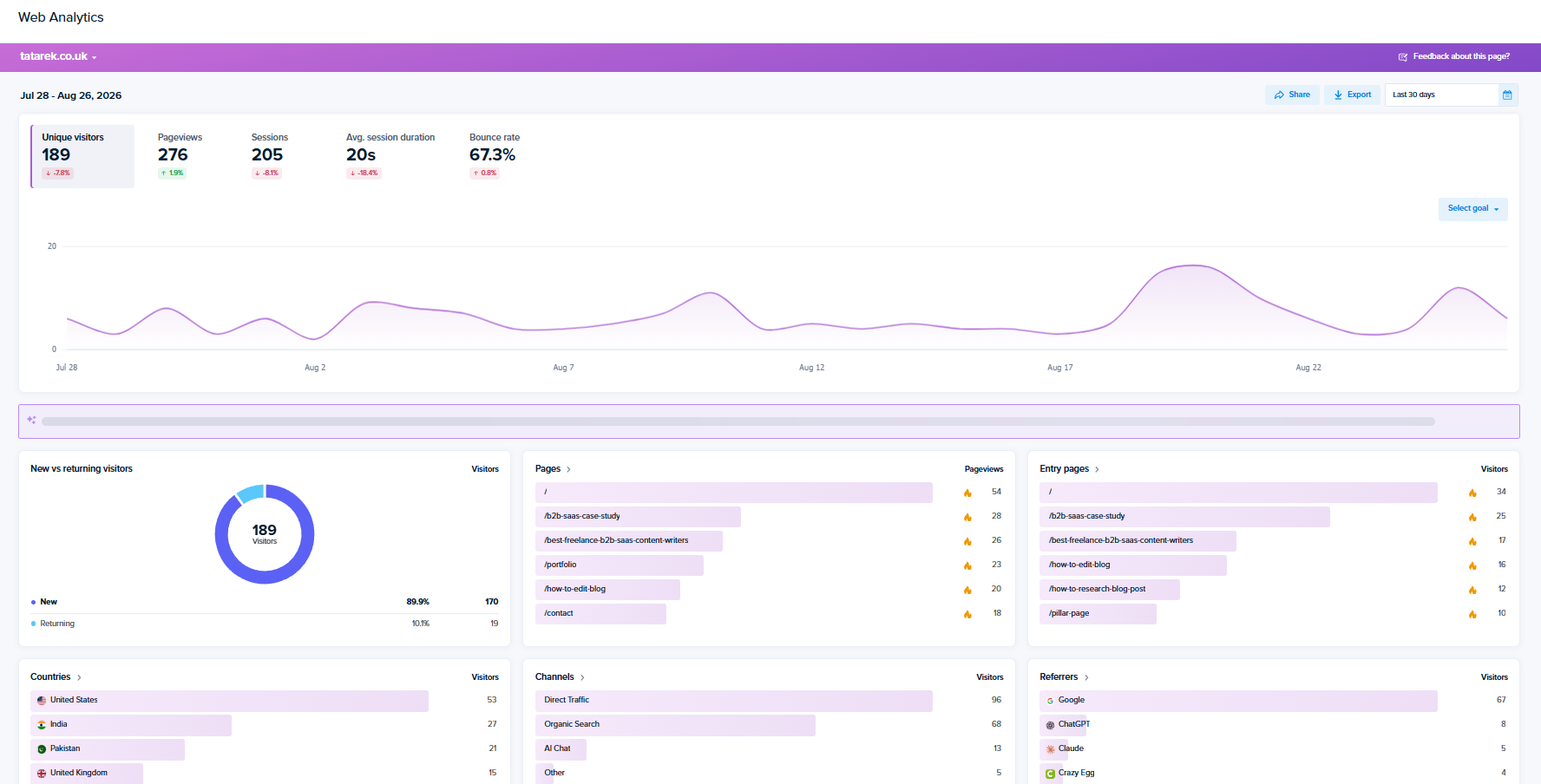
Crazy Egg is a better alternative to Hotjar if you want to consolidate the conversion rate optimization process in one platform.
It offers heatmaps, session recordings, web and conversion analytics surveys, popup CTAs, A/B testing, and personalization.
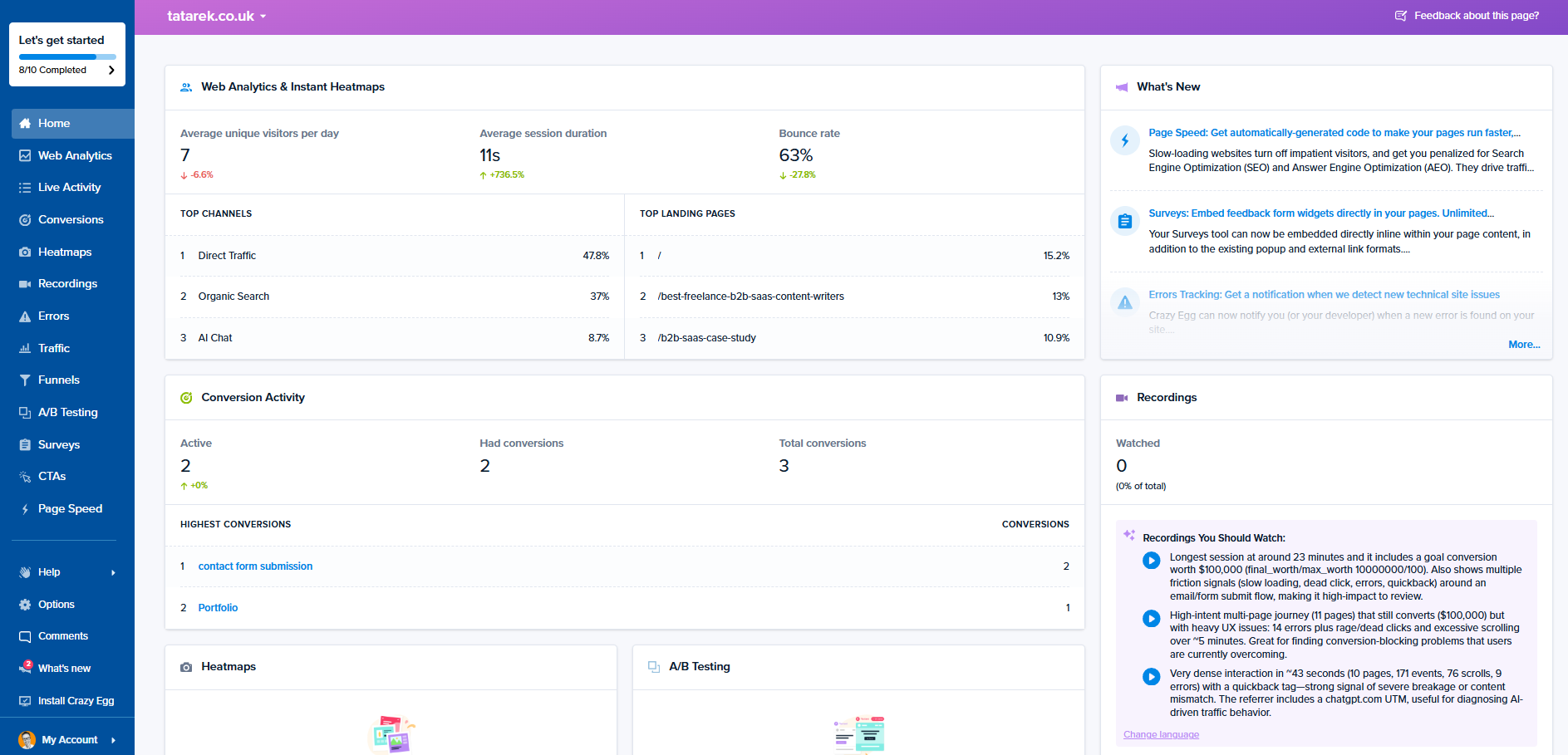
So everything you need to find and diagnose issues, develop and test fixes, and roll them out to specific user segments.
What makes Crazy Egg a better Hotjar alternative:
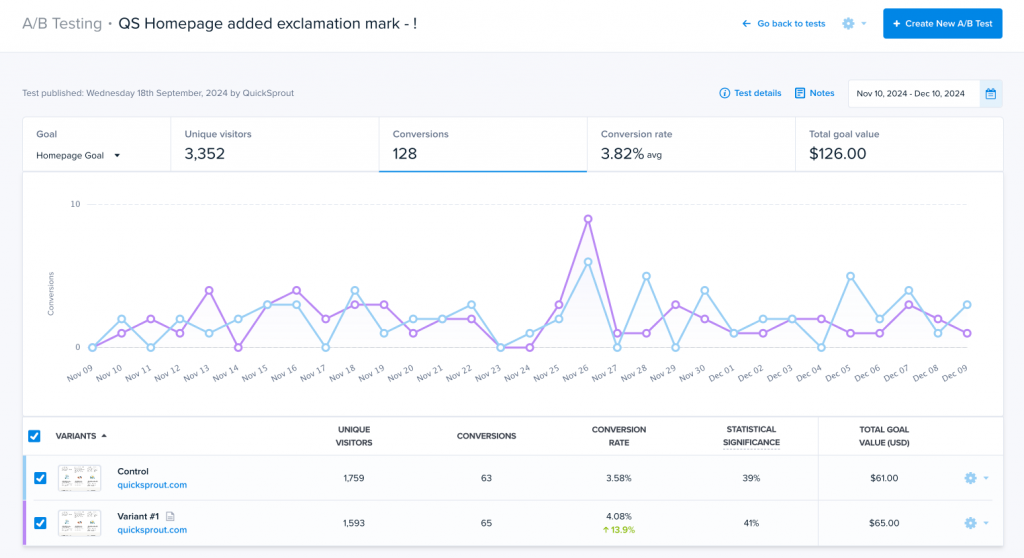
- Native A/B testing with a visual editor and Multi-Arm Bandit, plus audience targeting and personalization to roll out what wins. Hotjar has no native experimentation, so you must use — and pay for — a third-party tool.
- One product instead of three. All features sit in one product. Contentsquare splits the equivalent across Experience Analytics, Voice of Customer and Product Analytics.
- Unlimited domains and team members on every plan, with role-based access per domain.
- More heatmap types, including Confetti Maps for granular segmentation.
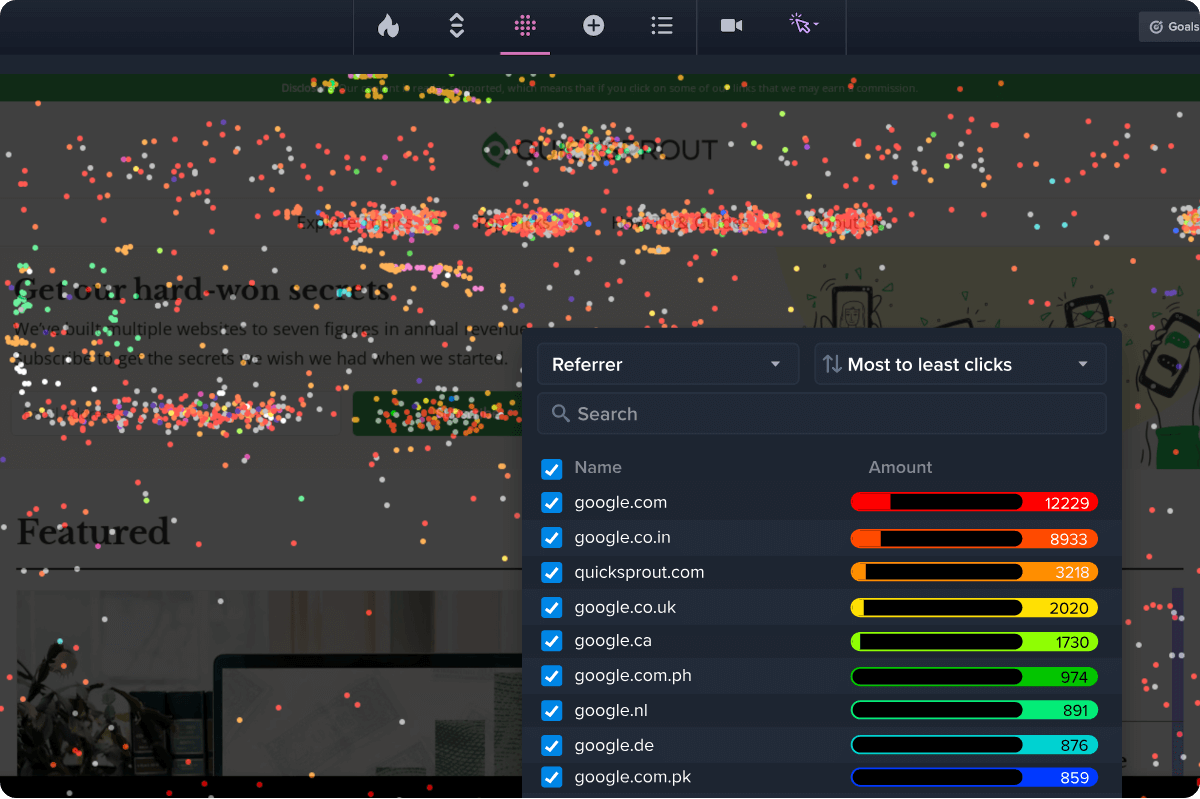
- No session sampling by default. It records all tracked pageviews unless you change it. Hotjar tiers replay capture 5% on Free and 15% on Growth.
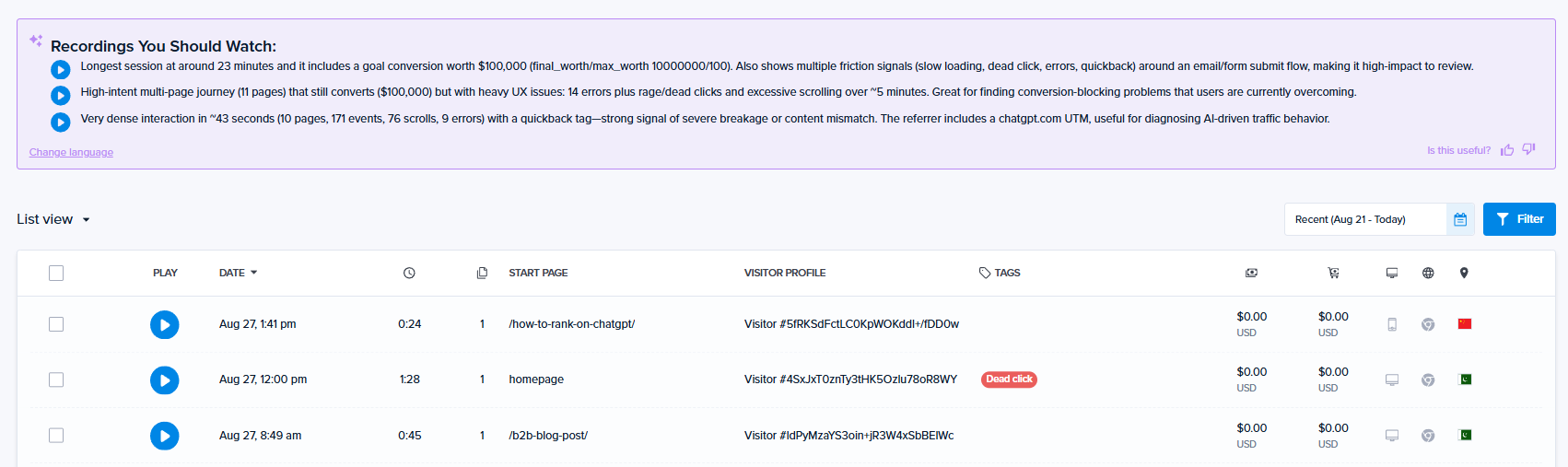
- AI capabilities. Automatic session summaries help you find relevant sessions and interpret what you see (they also work in web analytics, heatmaps, and surveys). There’s also JSON export and MCP servers for analysis in Claude, Gemini, etc, and Tasks, a new agentic optimization workflow.
- Standalone web analytics. Crazy Egg collects its own traffic data or imports it from GA4, giving you a much simpler UI. Hotjar analytics are behavior-focused, designed to work along GA4.
Crazy Egg limitations:
- Less advanced user journey analytics. While Crazy Egg has conversion and funnel analysis, it doesn’t have more complex features like user paths, cohort analysis, or root cause analysis available in Contentsquare’s Product Analytics. These are important for digital product development, so not a Crazy Egg use case.
- No interview or user research features. Crazy Egg surveys let you collect user feedback, but there are no tools for recruiting and interviewing UX research participants.
Crazy Egg pricing:
$29-$599/mo, with a free plan and a 30-day free trial.
#2 Microsoft Clarity: Best Free Option
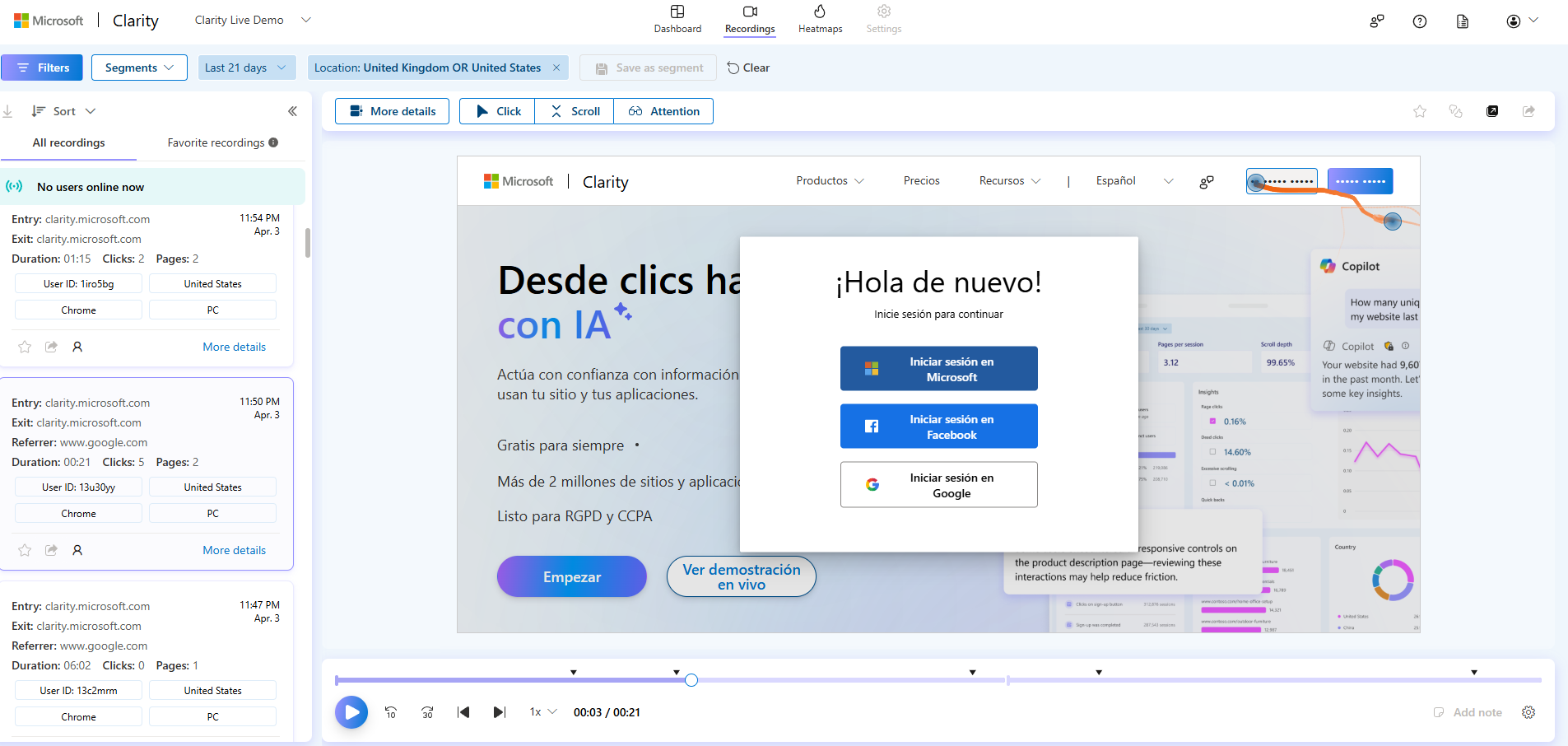
Microsoft Clarity is the best Hotjar alternative if you want completely free user behavior analytics.
It offers heatmaps, session recordings, funnels, JS error tracking, and AI session summaries. Free forever and across unlimited sites.
What makes Microsoft Clarity a better Hotjar alternative:
- It’s free at any traffic volume, while Hotjar’s free tier stops at 200,000 sessions a month and one project.
- No session sampling: It captures 100,000 sessions per project per day, all kept. Hotjar captures only 5% on Free, 15% on Growth.
- No paid plans. One free forever plan means no need to worry about escalating costs when your usage grows.
Microsoft Clarity limitations:
- No surveys or user interviews, so you need a third-party user feedback tool to match Hotjar’s capabilities.
- 30-day retention. Hotjar’s free plan offers the same, but the paid plans extend it to 13 months.
- Documented reliability gaps — GitHub #805 and #913, backed by user reviews.
Microsoft Clarity pricing:
Free.
#3 Mouseflow: Best Like-for-Like Replacement At A Lower Price
Mouseflow is a better Hotjar alternative for marketing teams who want deep friction analysis without moving up a pricing tier.
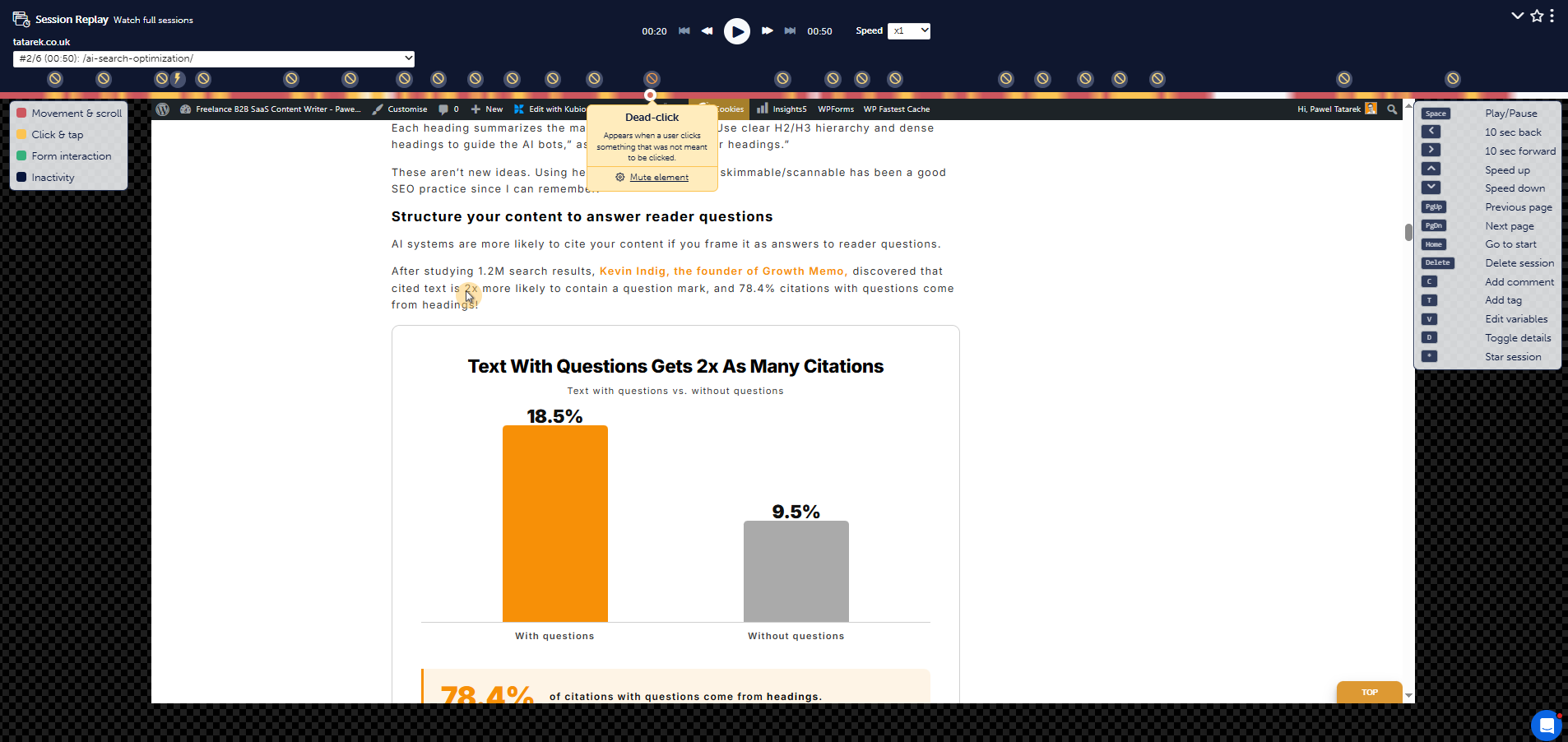
It offers session replays, seven heatmap types, a Friction Score, conversion funnels, journey and form analytics, and a feedback survey tool.
What makes Mouseflow a better Hotjar alternative:
- Friction Score on every plan. It scores each page against the site average using signals like rage clicks and dead clicks. Hotjar’s equivalent, Frustration Score, starts at Growth.
- Form analytics. Hotjar gates Form Analysis to Pro and Enterprise, and lists it as an optional add-on even there.
- Cheaper entry point: $25/mo against Hotjar’s $39/mo Growth plan.
Mouseflow limitations:
- No native mobile app support. Hotjar captures sessions on web and mobile apps.
- No performance monitoring. Hotjar includes Core Web Vitals and synthetic performance testing on every tier, including Free.
- No product analytics or user research tooling — no cohort or retention analysis, and nothing equivalent to Hotjar’s Engage interviews.
Mouseflow pricing:
$25–$319/mo, with a limited free plan and a 14-day free trial.
#4 Lucky Orange: Best for Small E-commerce Teams
Lucky Orange is a better Hotjar alternative if you run a small online store and need to see what happens inside the checkout.
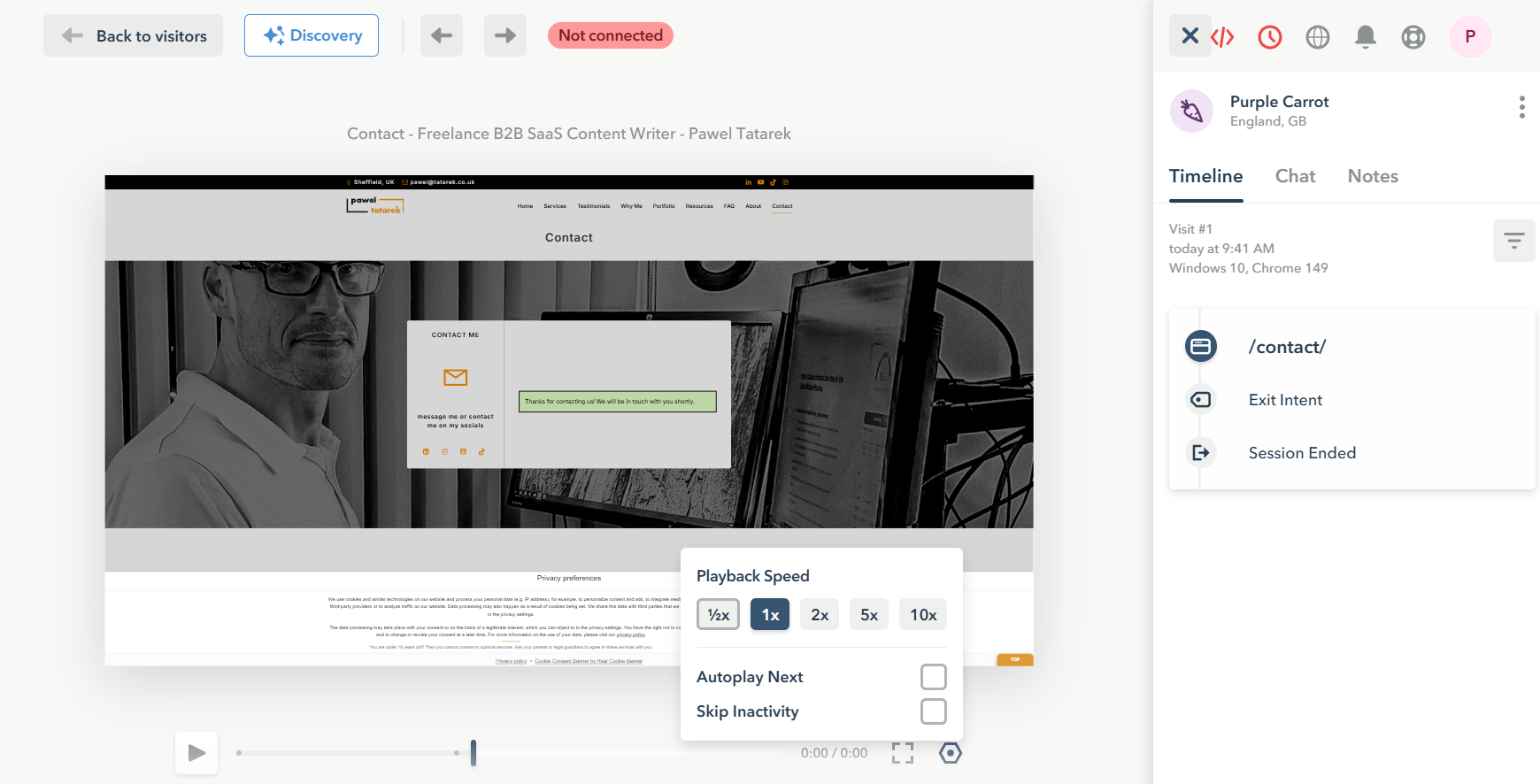
It supports dynamic heatmaps, session recordings, e-commerce funnels, page and form analytics, surveys and announcements, plus live chat and a live visitor view.
What makes Lucky Orange a better Hotjar alternative:
- It works on Shopify Plus checkout. Lucky Orange captures user behavior on Shopify Plus’s hosted checkout pages.
- Ecommerce funnels work out of the box. Tracks Add-to-cart through checkout to purchase automatically on supported platforms, with no funnel to configure first.
- You can engage the shopper while still on the page. Live chat and a live visitor view let you watch someone on your page and support them if they struggle.
Lucky Orange limitations:
- No MCP server. Discovery AI is an in-app chat assistant, so you’re locked in to whatever LLM they choose. Hotjar includes MCP access on every plan.
Lucky Orange pricing:
$32–$839/mo billed annually, with every feature included on every plan. Trial only, no free tier.
#5 Fullstory: Best for Product Adoption and Digital Transformation Projects
Fullstory is a good Hotjar replacement if you need advanced analytics features and onboarding tools to support user or employee product adoption and optimize internal tech stack.
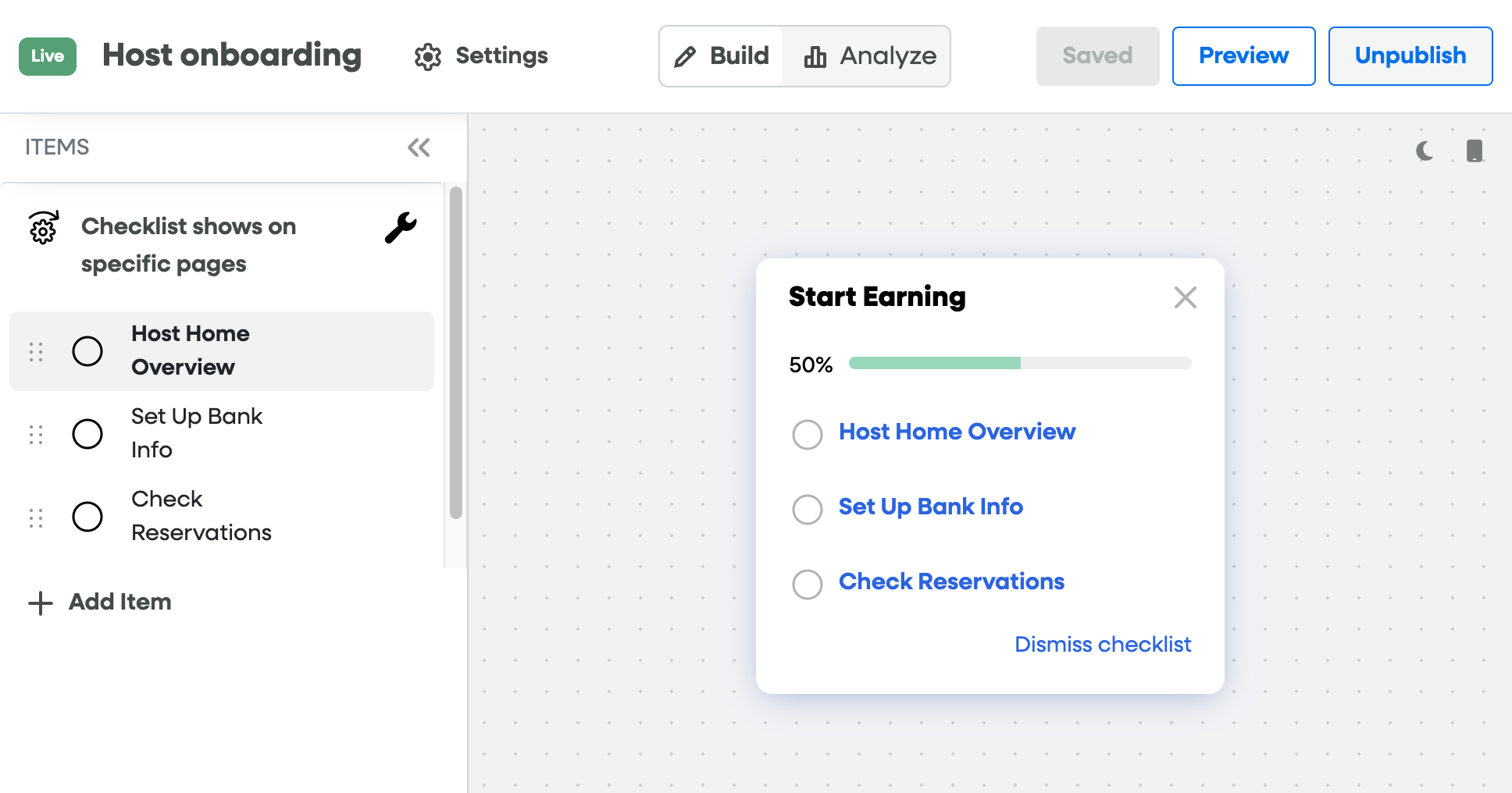
It tracks user behavior (heatmaps, session replays, funnels, journeys, retention analysis, segment health), collects feedback, and runs onboarding workflows.
What makes Fullstory a better Hotjar alternative:
- Internal-tool inventory, adoption scoring, and workflow mapping. It tells you which tools your employees use and how, which helps improve internal adoption and optimize your internal tool stack.
- In-app onboarding flows. It offers product tours, checklists, and in-app messages to drive feature adoption. Hotjar has no way to deliver guidance back to the user.
- Warehouse data sync and real-time personalization. Fullstory Anywhere sends behavioral data into your warehouse and returns it as personalized product experiences. Hotjar has no personalization engine.
Fullstory limitations:
- Fewer heatmap types. Only click and scroll maps, while Hotjar also supports movement and engagement ones.
- No user research tools, like participant recruitment or interview scheduling, which Hotjar offers through Engage.
FullStory pricing:
Not published. Vendr puts entry deals at $10K–$25K/yr. Free tier available with 30,000 sessions/mo, 12 months retention, for up to 10 users.
#6 PostHog: Best for Product and Engineering Teams
PostHog is a better Hotjar alternative if you need an analytics platform for your product and engineering teams.
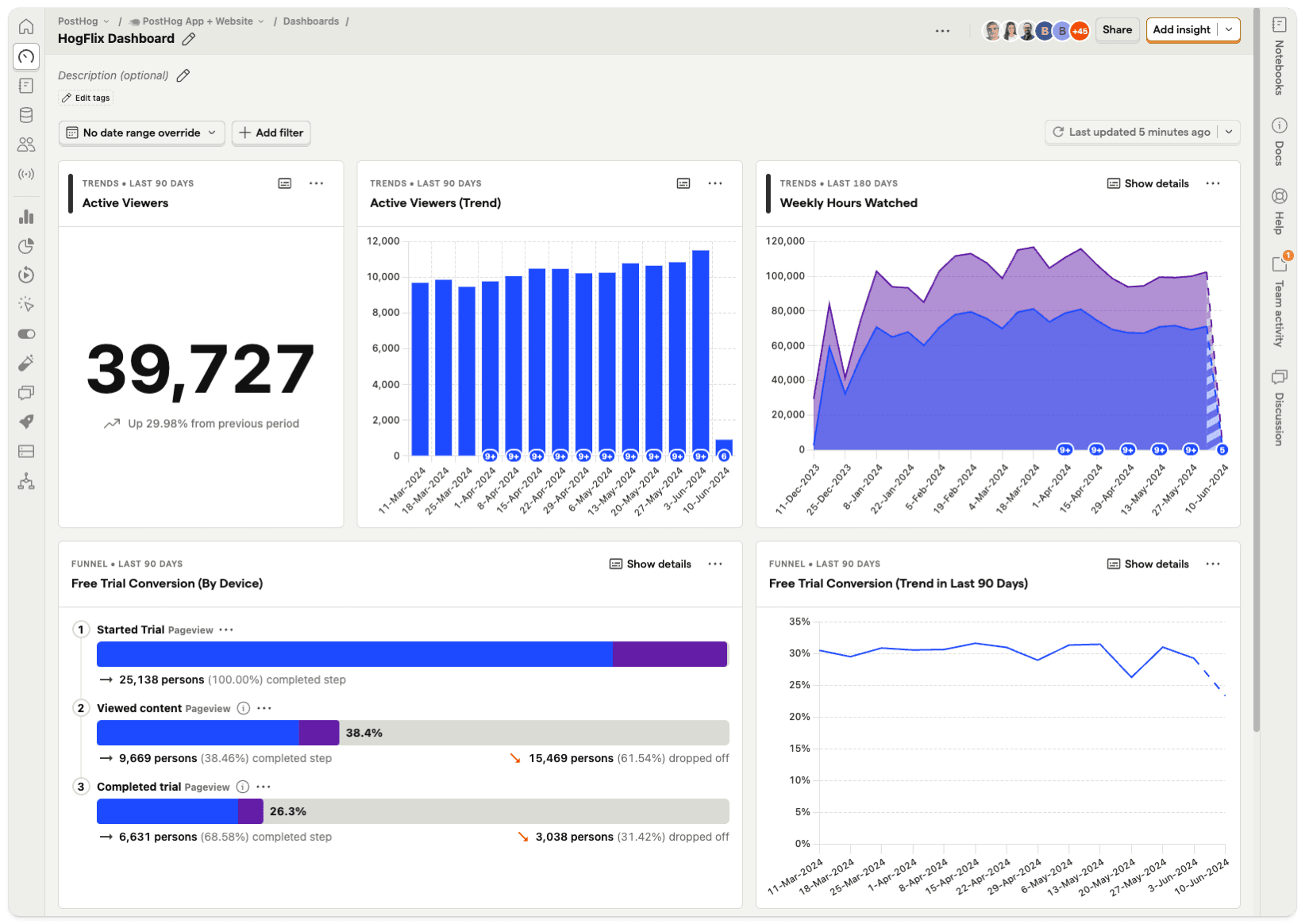
It bundles product analytics, session replay, heatmaps, feature flags, experiments, surveys, error tracking, logs, and a managed data warehouse into one platform.
What makes PostHog a better Hotjar alternative:
- Feature flags and experiments. It lets you ship a change behind a flag, test it, measure it, and roll it back. Hotjar has no native experimentation or personalization.
- A managed warehouse, a CDP, and seven years of history. Hotjar holds data only for 13 months and gates data export to Enterprise or a Pro add-on.
- LLM analytics for AI features. If your product calls a model, PostHog tracks traces, token usage, and costs. Contentsquare’s AI analytics measures traffic arriving from AI tools, which answers a different question.
PostHog limitations:
- No participant recruitment or interview scheduling, which Hotjar supports.
PostHog pricing:
Usage-based per product, each with its own monthly free allowance. Platform packages at $250/mo (Boost) and $750/mo (Scale).
7. VWO: Best for Experimentation-Led Teams
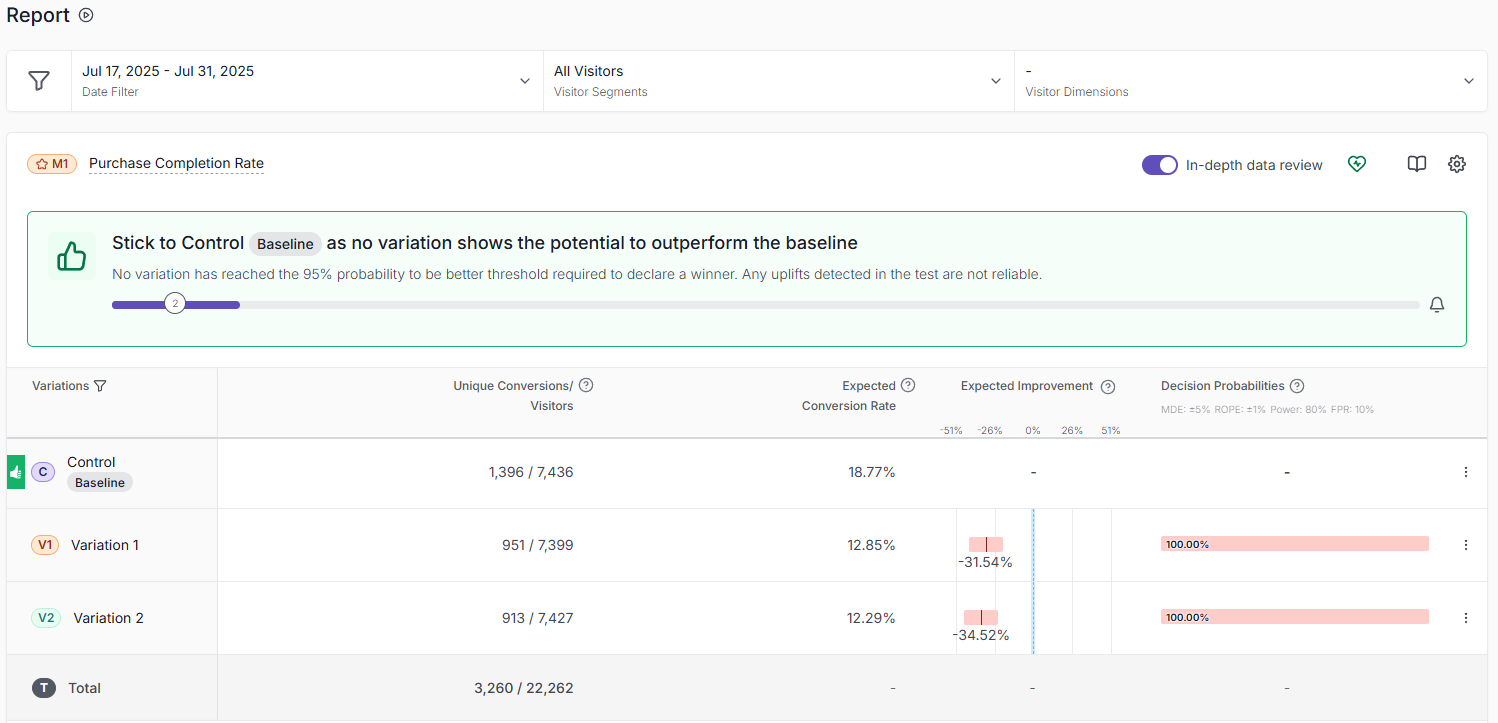
VWO is a better replacement for Hotjar if you want an experimentation platform with behavior analytics to support it. Similar to Hotjar, it offers heatmaps, session recordings, form analytics and surveys, and adds the experimentation layer Hotjar lacks.
What makes VWO a better Hotjar alternative:
- A/B, split URL, and multivariate testing with a visual and a code editor. Hotjar runs no experiments at all and routes testing to Optimizely, AB Tasty, and Kameleoon.
- Server-side and feature experimentation. VWO tests features behind flags in the product, not just pages on the website. A territory outside Hotjar’s remit.
- Personalization and audience targeting. You can ship the winning variant to a defined segment. Hotjar has no personalization engine.
- Commerce modules in the same suite. VWO offers product recommendations, push notifications, and site search alongside testing, none of which Hotjar offers.
VWO limitations:
- No performance monitoring. No Core Web Vitals, no synthetic performance testing, both of which Hotjar provides.
- No product analytics or user research tooling. No cohort or retention analysis, and nothing for recruiting participants or running interviews.
VWO pricing:
Not published on any product or tier. Vendr cites an entry point of roughly $314/mo for Testing alone, and says buyers running several modules at 50K–500K monthly tracked users commonly land between mid-five and low-six figures a year. Trial only, no permanent free tier.
8. Survicate: Best for In-Product Feedback
Survicate is a better alternative if you use Hotjar primarily for feedback collection and want more than just on-site surveys.
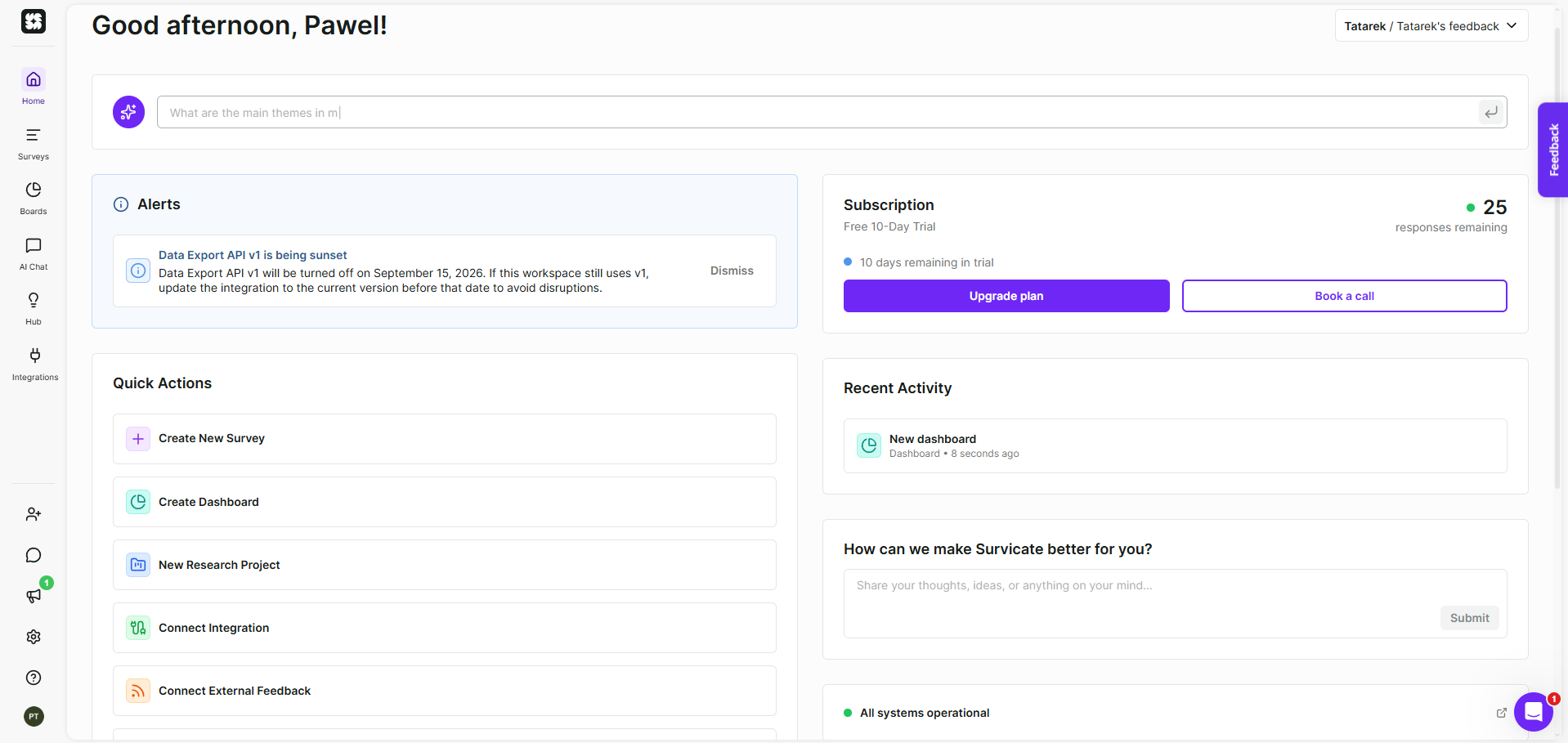
It runs surveys across web, email, link, mobile, and in-product, with 15+ question types, branching logic, auto-translation, and an AI repository.
What makes Survicate a better Hotjar alternative:
- Email, mobile, and link surveys to reach people who aren’t currently on your website (e.g., churned customers). Hotjar’s Voice of Customer collects feedback only through on-site feedback widgets.
- A research repository. Research Hub categorizes responses into themes automatically, and Research Assistant helps you understand what users are asking for. Hotjar summarizes sentiment per survey but doesn’t help you connect the dots between them.
- Auto-translation of surveys and responses. You can run the same study across markets and read the answers in one language.
Survicate limitations:
- No heatmaps or session recordings. Survicate isn’t a behavior analytics tool, so you can’t link survey responses to specific user sessions for further analysis without a third-party integration.
- No user interview recruitment or transcription features.
Survicate pricing:
From $114/mo billed annually. Ten-day free trial.
What’s the Best Hotjar Alternative?
- Choose Microsoft Clarity if you want free behavior analytics on any amount of traffic, and 30-day retention is enough.
- Choose Mouseflow if you want the same capabilities as in Hotjar, many available in lower tiers.
- Choose Lucky Orange if you run a smaller online store and need to see what happens inside the checkout and talk to shoppers in real time.
- Choose FullStory if you’re running digital adoption or transformation projects and need a tool covering your website, product, and internal software.
- Choose PostHog if the team needs detailed technical insights, and you want flags, experiments, and your data warehouse in the same place.
- Choose VWO if experimentation is the main focus and behavior analytics to feed it.
- Choose Survicate if you want a dedicated multi-channel feedback tool.
- Choose Crazy Egg if you want the whole optimization process in one platform — watching behavior, understanding it, testing a fix and rolling it out — across unlimited domains and team members.
If you’re trying to consolidate all your website optimization needs, talk to Crazy Egg’s sales team about what the switch would look like.
Frequently Asked Questions
What happened to Hotjar?
Contentsquare acquired Hotjar in 2021, and the two platforms merged in 2025. The core Hotjar product works as it used to for existing users, but new signups go through Contentsquare.
One of the changes was pricing. Hotjar-branded plans no longer exist, and features are now split across three separately priced product lines: Experience Analytics, Voice of Customer, and Product Analytics (powered by Heap).
How much does Hotjar cost now?
As of August 2026, Hotjar’s Experience Analytics, covering session replays and heatmaps, offers a free plan, and the paid plans start from $39/mo. Voice of Customer, which includes surveys and feedback, starts from $79 a month. Product Analytics is quote-only, as are the higher Experience Analytics tiers.
Procurement data from Vendr puts the median Hotjar/Contentsquare annual contract value at $20,000. According to SpendHound, small businesses spend on average $13,749 and enterprises $154,400.
Is there a free Hotjar alternative?
Yes, there is a free Hotjar alternative. Microsoft Clarity is free with no traffic limits. Mouseflow, FullStory, and PostHog all offer free tiers with usage caps, and Crazy Egg has a free plan including unlimited surveys, instant heatmaps, and web analytics.
Is there an open-source Hotjar alternative?
PostHog offers an open-source edition you can self-host, which suits teams who want data on their own infrastructure. Matomo is the other established open-source option offering web analytics and behavior. As their setup is more complex, they make most sense when you must host your own data.
Which Hotjar alternative is best for mobile apps?
PostHog has the widest native mobile app coverage, with SDKs for iOS, Android, Flutter, React Native, and Kotlin Multiplatform. Microsoft Clarity includes mobile SDKs on its free plan. FullStory supports mobile too, but only as a paid add-on.
How do I switch from Hotjar without losing my data?
To switch from Hotjar without losing your data, manually export your insights before you cancel your subscription. You can’t directly migrate your data into another tool. You can, however, save your session recording list with metadata, like URLs, tags, notes, and user attributes (but no video clips), visual heatmap snapshots and raw click data, and all user responses into .csv or .xlsx files.