Omnichannel sales unifies customer data and coordinates outreach across all channels to create a continuous buyer experience. Most sales teams still operate in silos where email, phone, chat, and in-person conversations produce fragmented data and inconsistent follow-up. That gap is where revenue gets lost.

The shift is significant. Recent data from Capital One Shopping shows the share of omnichannel shoppers has climbed to 91%. Teams that close the gap see faster deal cycles, higher conversion rates, and stronger customer retention, all backed by a CRM that records every interaction.
This guide covers what omnichannel sales is, how it differs from multichannel approaches, the principles that make it work, and a step-by-step implementation framework.
Table of Contents
What is omnichannel sales?
Omnichannel sales is a sales approach that unifies customer data and coordinates outreach across channels to create a seamless buyer experience. Every touchpoint, whether email, phone, LinkedIn, live chat, or in-person, builds on the last rather than starting from scratch. A CRM acts as the system of record that maintains customer context across all of them, so any rep or automated sequence can pick up exactly where the last interaction left off. HubSpot CRM is built for this role, connecting every channel into a single unified record.
The definition applies equally to B2C ecommerce and complex B2B sales:
- In ecommerce, omnichannel sales mean a customer can research a product on mobile, ask a question via live chat, receive a follow-up email, and complete a purchase in-store, all without repeating themselves at each step.
- In B2B sales, omnichannel means an account executive, sales development rep, and customer success manager share a single deal record, so a prospect is never asked to re-explain their requirements, and every channel touchpoint reinforces the same message.
B2B buying has become substantially more complex. According to Gartner’s 2025 B2B Buying Survey, 61% of B2B buyers now prefer a rep-free buying experience, and 73% actively avoid suppliers who send irrelevant outreach. Most of the journey happens through independent research, peer conversations, and digital self-service. Omnichannel sales acknowledges this reality and builds a coordinated presence across every touchpoint where buyers spend their time.
For a closer look at what this journey looks like from the customer’s perspective, see HubSpot’s guide to building a connected omnichannel experience.
How is omnichannel sales different from multichannel sales?
Multichannel sales uses multiple channels (email, phone, social, and chat) to reach buyers, but those channels typically operate without shared customer context or coordinated sequencing. Each channel has its own data, its own metrics, and its own team.
Pro tip: For a broader look at how multichannel marketing fits into the picture, HubSpot’s guide covers the fundamentals.
Omnichannel sales requires a unified customer record that includes identity, activity history, preferences, and consent. That unified record changes the nature of every subsequent interaction. Context continuity reduces repetitive questions and inconsistent messaging across revenue teams. The buyer feels known rather than managed.
The comparison below illustrates the structural difference across five dimensions:
|
Dimension |
Single-Channel |
Multichannel |
Omnichannel |
|
Data Continuity |
Siloed — no shared record |
Partial — separate systems per channel |
Unified — single customer record across all channels |
|
Coordination/ Orchestration |
None |
Minimal — each channel acts independently |
Proactive — next best action triggered by buyer signals |
|
Handoffs |
Not applicable |
Manual, prone to dropped context |
Structured SLAs with full context transferred |
|
Reporting Visibility |
Single source, limited insights |
Channel-by-channel, fragmented view |
Cross-channel attribution and revenue impact |
|
Customer Context |
None retained across interactions |
Inconsistent — depends on channel |
Continuous — buyer history and preferences inform every touchpoint |
Continuous — buyer history and preferences inform every touchpoint
Multichannel adds coverage, but omnichannel adds coordination. Teams that confuse the two invest in additional channels without solving the underlying problem: fragmented data and inconsistent buyer experiences that erode trust and extend deal cycles.
Core Principles of Omnichannel Sales
Omnichannel sales works because it is built on a set of operating principles that fundamentally change how revenue teams engage buyers. Understanding these principles and the reasoning behind each is essential before attempting implementation.
1. Unified Customer Identity
A unified customer record is the foundation of every omnichannel interaction. That record must include:
- Identity (name, role, company).
- Activity history (every email, call, meeting, and page visit).
- Stated preferences.
- Consent for each channel.
Without a unified identity layer, channel coordination is impossible; teams are trying to orchestrate a journey they cannot fully see.
In practice, this means:
- Deduplicating contact and company records.
- Connecting marketing interaction data to sales CRM records.
- Establishing data governance policies that keep the record clean as deals progress.
HubSpot’s Data Hub supports this directly, combining scattered data, enhancing data quality automatically, and activating customer intelligence across the full HubSpot platform with AI-powered ease.
2. Journey Orchestration
Journey orchestration selects the next best channel, message, and action based on buyer stage and engagement signals. Instead of executing a fixed outreach sequence, orchestration-driven teams respond dynamically.
For example, if a prospect opens an email but does not respond, the next touchpoint might be a LinkedIn connection request or a targeted ad, not a follow-up email that repeats the same message.
Effective orchestration requires defined buyer stages, clear signal definitions (which actions indicate readiness to advance), and automation rules that trigger the right channel at the right moment. Sales sequences in HubSpot Sales Hub allow teams to build and manage these orchestrated flows from a single platform, with task automation and pipeline visibility built in.
3. Sales SLAs and Handoff Protocols
Sales service-level agreements (SLAs) define who follows up, in what channel, and by when after a trigger event. Without explicit SLAs, handoffs between SDRs and AEs, or between marketing and sales, become the most common source of dropped context and lost deals. A prospect who fills out a demo request form should not receive a generic introductory email from an AE who has no visibility into the prospect’s prior engagement history.
Well-designed SLAs specify:
- Response time windows by deal tier.
- The channel of first contact.
- What context must be transferred in the handoff record.
- Escalation rules when SLAs are not met.
These protocols transform handoffs from a reliability risk into a competitive advantage. Sales teams that use partner or reseller channels should also note that overlapping channel ownership creates friction.
4. Context Continuity Across Teams
Context continuity reduces repetitive questions and inconsistent messaging across revenue teams. When a prospect moves from an SDR to an AE, or from an AE to customer success, that transition should feel invisible to the buyer. The same discovery insights, stated priorities, and objections should inform every subsequent interaction, no matter who is running the conversation.
Context continuity does more than improve the buyer experience. When AEs already know a prospect’s pain points, they can spend the first conversation validating a solution rather than asking questions the SDR already answered. Deals move faster as a result.
5. Channel Complementarity, Not Channel Competition
In a true omnichannel model, channels reinforce each other rather than competing for credit. An email sequence can warm a prospect for a phone call. A LinkedIn engagement can trigger a personalized follow-up. Each channel serves a distinct purpose in the buyer’s journey, and attribution reporting reflects the contribution of each rather than over-crediting the last touch.
Pro tip: Marketers should review their current pipeline attribution model. If they’re only tracking first-touch or last-touch attribution, they’re missing the full picture of what’s driving deals forward. HubSpot’s Smart CRM connects activity across every channel so revenue teams can see which touchpoints contribute to conversion — and optimize accordingly.
Practical Omnichannel Sales Examples
The principles above describe the model in theory. The following three examples show what omnichannel sales looks like when organizations get it right. Each company approaches the strategy differently, but all three share the same structural commitment: a unified customer record, coordinated channel execution, and context that follows the buyer throughout the entire journey.
Nike: Unified Commerce From Digital to Physical
Nike’s omnichannel execution is one of the most studied in retail commerce. The Nike app, Nike.com, and Nike retail stores operate from a shared customer identity layer that tracks purchase history, browsing behavior, product preferences, and membership tier. When a customer adds a product to their cart on the app but does not complete the purchase, in-store staff can reference that cart context to create a seamless pick-up-in-store experience.
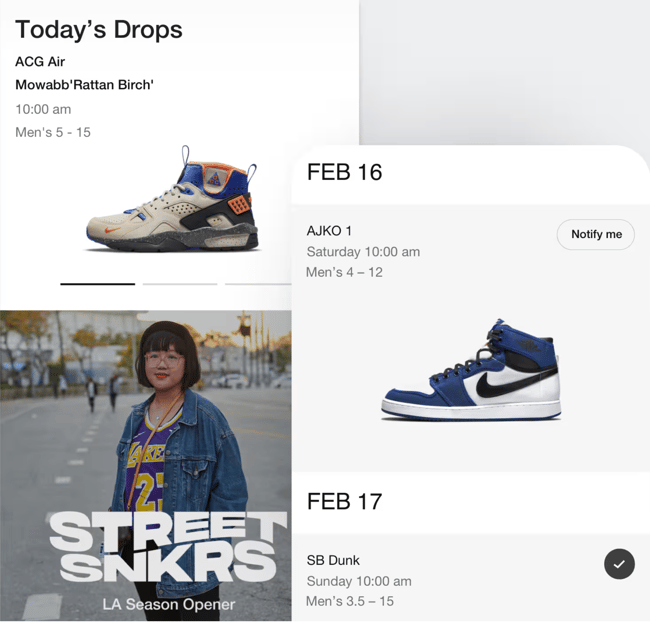
Nike’s SNKRS app extends this further by using engagement signals, which product drops a member has watched, which launches they’ve entered, to personalize every subsequent touchpoint. The result is a customer experience that feels consistent regardless of channel, and a sales motion that converts at higher rates because every interaction builds on prior context rather than starting from scratch.
What we like: Nike’s unified identity layer connects app behavior, purchase history, and in-store interactions into a single member record. The brand does not ask customers to identify themselves at each touchpoint — the system already knows who they are. That continuity is the hallmark of true omnichannel execution.
Zoom: Omnichannel B2B Sales With Product-Led Data
Zoom’s growth model illustrates omnichannel B2B sales at scale. Zoom’s free tier generates usage data (meeting frequency, participant counts, feature adoption) that feeds directly into its CRM and informs sales outreach timing, channel selection, and messaging. An account that has been consistently hitting free-tier limits receives targeted outreach that references that usage pattern rather than a generic upsell pitch.
Zoom’s sales team operates with a clear SLA: product signals trigger an outreach window, and the channel sequence (email, then phone, then in-product message) is standardized across the team. The result is a sales motion where human outreach arrives at exactly the moment a buyer is already experiencing friction, and with context that makes the conversation feel relevant rather than intrusive.
Best for: B2B SaaS teams with a product-led growth motion. Connecting product usage data to the CRM creates a powerful signal layer that transforms omnichannel outreach from volume-based to timing-based, reaching buyers at the exact moment of highest intent.
Apple: Channel Coordination Across Self-Serve, Retail, and Enterprise
Apple’s omnichannel model spans three distinct buyer motions: consumer self-serve via Apple.com, retail with Genius Bar support, and enterprise sales through Apple Business. All without fragmenting the customer experience.
An enterprise IT leader who manages a consumer Apple ID maintains a separate but connected enterprise profile, and Apple’s account teams can reference both when discussing device procurement and support.
What makes Apple’s model distinctive is the role of the physical store as a channel complement rather than a standalone experience. The Apple Store is not just a point of sale. It functions as a service touchpoint, a discovery environment, and a post-sale support channel. Each of these roles contributes to a unified customer journey that increases lifetime value well beyond the initial transaction.
What we like: Apple treats in-person interaction as one node in a broader omnichannel system rather than an isolated transaction. Revenue teams building omnichannel strategies should apply the same thinking to every channel, including events, in-person demos, and QBRs. The question worth asking for each one is how it contributes to the unified buyer journey.
How to Implement Omnichannel Sales
Implementing omnichannel sales requires aligned data architecture, defined processes, and the right technology stack. The changes touch how revenue teams operate across every channel, not just how they use their tools.
Step 1: Audit your current channel activity and data architecture.
Before building an omnichannel strategy, sales leaders must understand the current state of their channel coverage and data quality. That audit should answer four questions:
- Which channels are active?
- Which channels are tracked in the CRM?
- Where do data gaps or duplicates exist?
- Where do handoffs currently break down?
In my consulting work with B2B sales teams, I’ve found that this audit almost always surfaces a version of the same problem: the CRM captures email and deal-stage data reasonably well, but phone calls, LinkedIn activity, and in-person meetings are logged inconsistently or not at all. Those gaps mean the customer record is structurally incomplete before orchestration even begins.
Pro tip: Run a data quality report in HubSpot’s Data Hub before building any automation. Deduplicate contact records, standardize company properties, and identify which contact fields have less than 70% fill rates. Orchestration built on incomplete data amplifies noise rather than signal.
Step 2: Define your unified customer record.
A unified customer record is a structured data model that captures identity, engagement history, preferences, and intent signals required to coordinate omnichannel execution. Sales and RevOps teams should agree on the minimum required fields for a record to be considered actionable, and build workflow automations that flag incomplete records for enrichment.
Key fields for an omnichannel-ready contact record include:
- Persona and role.
- Primary channel preference.
- Last meaningful engagement date and channel.
- Deal stage and open opportunities.
- Content engagement history.
- Consent flags for each channel.
HubSpot CRM stores all of this in a single, unified contact record and Breeze AI can automatically enrich records with company data, recent news, and engagement signals. Learn how to create and manage leads in HubSpot.
Step 3: Map your buyer journey by stage and channel.
Journey orchestration requires a clear map of which channels serve which buyer stages. Each stage should specify the primary channel, secondary channel, and escalation path if the primary does not produce a response.
- At the awareness stage, digital ads, content, and social engagement build familiarity.
- At the consideration stage, personalized email sequences, phone outreach, and targeted demos create conviction.
- At the decision stage, in-person meetings, proposal delivery, quoting, and payment flows close the deal.
When I work with sales teams on this mapping exercise, I ask them to trace a recent closed-won deal backward and identify every touchpoint that contributed to the outcome. Without exception, the most consistent pattern across complex B2B deals is that the winning team used more channels more consistently, not louder, just more coordinated.
Step 4: Build coordinated sequences with clear SLAs.
Once the buyer journey map is in place, the next step is building coordinated sequences that enforce the right channel, message, and timing for each stage. Sequences should be built in the CRM so that every touchpoint is logged against the contact record automatically.
SLAs should define:
- Who is responsible for follow-up at each stage.
- What the response time window is.
- What context must be transferred in any handoff.
HubSpot Sales Hub supports sales sequences, task automation, meeting scheduling, and pipeline visibility; all connected to the same contact record. That means a sequence that starts with an automated email and moves to a manually assigned call task maintains full context across both touchpoints without any manual data transfer.
Pro tip: Set a sequence SLA for inbound leads. Any prospect who fills out a form or books a meeting should receive a personalized response within four business hours, in the channel they used to engage. Response time is one of the strongest predictors of connection rates in outbound and inbound sales.
Step 5: Connect your sales intelligence stack.
Omnichannel execution depends on signal quality, and signal quality depends on the data flowing into the CRM from every channel a team uses. Sales intelligence integrations connect intent data, news alerts, social engagement signals, and firmographic enrichment to the contact record, giving reps a real-time view of buying intent before they reach out.
HubSpot’s App Marketplace includes hundreds of sales intelligence integrations, including LinkedIn Sales Navigator, ZoomInfo, and Bombora, that feed signals directly into HubSpot CRM. The more signal data the CRM has, the more precisely journey orchestration can identify the right moment and channel for each outreach.
Step 6: Implement AI-powered prospecting and automation.
AI changes the economics of omnichannel execution by automating the research, personalization, and timing decisions that previously required manual effort at every touchpoint. Teams that implement AI-powered prospecting can execute true omnichannel outreach at scale without proportional increases in headcount.
HubSpot’s Breeze AI system works across the full HubSpot platform, automating tasks and surfacing insights from customer data at scale. The Breeze Prospecting Agent automatically researches accounts against an ideal customer profile, drafts personalized outreach, and recommends the best time and channel for each touchpoint.
What we like: Breeze AI’s prospecting agent doesn’t just automate outreach — it prioritizes which accounts deserve attention based on fit and engagement signals. That prioritization function is where AI creates the most value in an omnichannel model: not replacing rep judgment, but focusing it on the opportunities most likely to close.
Step 7: Streamline quoting, payment, and deal closure.
The final stage of the omnichannel journey (quoting, invoicing, and payment) is where many otherwise well-designed processes break down. When a rep has to leave the CRM to generate a quote in a separate system, deal context is lost, approval cycles slow down, and the buyer experience degrades at the exact moment when momentum should be highest.
Commerce Hub helps teams generate quotes, send invoices, and collect payments inside the CRM record. Quotes, invoices, and payment links are generated from deal data, sent through the preferred channel, and logged automatically when the buyer engages.
Pro tip: Enable payment links directly within the quote workflow. Buyers who can pay immediately upon receiving a quote tend to close faster than those routed through a separate payment portal. Commerce Hub supports this natively — no third-party integration required.
Omnichannel Sales Success Metrics to Track
The following six metrics provide a framework for assessing omnichannel performance at both the process level and the revenue level.
1. Cross-Channel Engagement Rate
Cross-channel engagement rate measures the percentage of prospects who interact with two or more channels before a deal stage advance. A rising cross-channel engagement rate indicates that the orchestration model is creating meaningful multi-touchpoint relationships, not just adding channels to the mix.
Track this by deal stage to identify where channel diversity is weakest.
2. Handoff-to-Opportunity Conversion Rate
Handoff-to-opportunity conversion rate measures the percentage of leads that successfully advance to an active opportunity after an SDR-to-AE or marketing-to-sales handoff. A low rate typically indicates a context gap: The receiving rep is starting without sufficient information to continue the conversation effectively.
Track this metric before and after implementing structured handoff protocols.
3. Deal Velocity by Channel Mix
Deal velocity measures how quickly deals move through each pipeline stage. Segmenting velocity by channel mix (deals that used two channels versus four) reveals whether expanded channel coverage actually accelerates deal progression.
In my experience, teams that add channels without adding coordination often see no improvement in deal velocity. True omnichannel execution should produce measurable acceleration.
4. Channel Attribution Contribution
Channel attribution contribution uses multi-touch attribution to allocate revenue credit across all the channels that contributed to a closed deal. This metric moves teams beyond first-touch or last-touch attribution and reveals which channel combinations produce the highest close rates. Over time, attribution data should inform where teams invest their orchestration resources.
5. CRM Data Completeness Score
CRM data completeness score measures the percentage of active contact and deal records that meet the minimum required field thresholds for omnichannel orchestration. This is a leading indicator: Teams with high completeness scores execute better sequences, generate more relevant AI insights, and maintain stronger context continuity. Target a minimum 80% completeness rate on required fields before scaling automation.
6. Customer Retention and Expansion Rate
The long-term proof of omnichannel effectiveness shows up in retention and expansion metrics. According to McKinsey’s 2024 B2B Pulse Survey, B2B decision makers now use an average of 10 channels during their purchase journey, up from just five in 2016. More than half (54%) say they would switch suppliers after a poor omnichannel experience. Coordinated presence across every touchpoint isn’t a nice-to-have. It’s the difference between retention and revenue lost.
Track net revenue retention by cohort and correlate with omnichannel engagement score to build the business case for continued investment. Teams that extend this model post-sale will also benefit from implementing omnichannel support.
Frequently Asked Questions About Omnichannel Sales
Which channels should my sales team prioritize first?
Start with the channels where buyers already spend the most time and where CRM tracking is most reliable. For most B2B teams, that means email and phone first, followed by LinkedIn once those two are coordinated and producing consistent data. The best guide is your own closed-won data — review deals from the past 12 months and map the touchpoints that preceded each stage advance.
How do we avoid over-messaging across channels?
Over-messaging is almost always a symptom of disconnected channel execution rather than excessive outreach volume. The solution is to manage channel frequency at the contact record level in the CRM, not at the individual channel level. Set a total weekly outreach cap per contact, typically three to five touches across all channels, and pause other channels automatically when one produces a response.
What data do we need in our CRM to enable omnichannel sales?
Omnichannel sales requires a unified customer record that includes identity, activity history, channel preferences, deal stage, marketing engagement history, and consent status for each channel. The most common gap is activity history from phone and in-person meetings. Reps who do not log call outcomes and meeting notes create a partial record that undermines orchestration quality downstream. Establishing a non-negotiable logging standard and enforcing it with required fields in the CRM is the highest-impact data hygiene action most teams can take.
How do we roll this out without disrupting reps?
Start with a pilot cohort of five to eight reps who are already consistent CRM users, and run the new omnichannel sequences for one quarter before rolling out broadly. Use that pilot to identify process gaps, refine SLAs, and gather rep feedback before scaling. Reps are more likely to adopt new workflows when they see early evidence of results and a controlled pilot generates that evidence without disrupting the broader team.
How can AI help without losing our brand voice?
AI accelerates omnichannel execution most effectively when it handles research, timing, and personalization inputs, while human judgment shapes the final message. Teams that deploy AI to draft outreach and then edit those drafts maintain brand voice while reducing the time required per touchpoint. HubSpot’s Breeze AI assists with automation across Sales Hub and Marketing Hub, and the Breeze Assistant helps reps draft, summarize, and update records in real time. Brand voice guidelines and human review checkpoints are always set by the team.
Build a sales motion buyers actually experience as one.
Omnichannel sales is about connecting the channels you have so that every touchpoint builds on the last. Buyers who feel known across their journey convert faster and expand more consistently. The teams that execute this well share a common foundation: a unified CRM, AI that surfaces the right signal at the right moment, and humans who apply judgment where it matters most. HubSpot’s Smart CRM connects all of its hubs into a single platform, giving revenue teams the architecture to do exactly that.
After nearly 18 years in B2B sales, the difference between teams that coordinate and teams that just cover comes down to architecture. Buyers do their homework across a dozen touchpoints before they talk to a rep. When the rep arrives with context that reflects that entire journey, trust accelerates and deals close. That’s what omnichannel sales is built to produce.